travel
여행
Create your experience
Favourite 💖 at least five items from our 100 top amazing things or take a short quiz 📝 to generate a custom Korea 🇰🇷 experience just for you.

Naejangsan National Park
Jeolla-do Area
Called "Geumgangsan Mountain of Honam," this is Jeongeup’s representative mountain as one of the 5 mountains of Honam region with breathtaking autumn colors. Notable sites include Byeongnyeonam Hermitage, a site where Chusa Kim Jeong-hui is said to have meditated in; Uhwajeong Pavilion, a legendary pavilion that is said to have flown away with wings; Yonggul Cave, a place of refuge for the Joseon wangjo sillok (Annals of the Joseon Dynasty) and the portrait of King Taejo of Gyeonggijeon Shrine during the Japanese Invasion of Korea in 1592; and the Eunjeogam and Biraeam Hermitages.

Mudeungsan National Park
Jeolla-do Area
Mudeungsan National Park was designated as the 21st national park in March, 2013. It encompasses Gwangju as well as Hwasun-gun and Damyang-gun in Jeollanam-do. The highest peak at 1,187 metres is Cheonwangbong Peak. The Columnar Joints in Mudeungsan Mountain (a National Monument) look quite superb. The mountain is covered with azaleas, including royal azaleas, in spring, field touch-me-not and hydrangeas in summer, autumn leaves and silver grasses in fall, and snow in winter.

Yangnim History & Culture Village
Jeolla-do Area
Yangnim-dong was the first in Gwangju to open up to modern western culture about 100 years ago. In the village visitors will find the House of Missionary Wilson; an old noble family house; the Jo Ahra Memorial Hall built to commemorate the mother of democratisation; Avison Memorial Center to honor Avison, who led a rural movement in Korea; Owen Memorial Hall, in honor of the martyred missionaries; and Jeongyulseong-ro Road to remember Korean composer Jeong Yul-seong.

5-18 Memorial Park
Jeolla-do Area
The 5·18 Memorial Park was created to remember the lessons learned from the May 18th Democratization Movement. The park spans 205,000 square metres and is located on the Sangmudae site, which was given for free as a compensation to Gwangju citizens. In particular, the 5·18 Memorial Culture Centre serves as the human rights centre and as a venue where people can learn about the spirit of the democratisation movement. The landscaping here is beautiful, making it an ideal place for citizens to rest.

Asia Cultural Centre
Jeolla-do Area
Asia Culture Centre is an international cultural and artistic centre for the creation, exhibition, performance and distribution of content. It is also a place for cultural exchanges and has served as an integrated platform where participants from across the world can freely share ideas. Visitors will find the ACC Archive & Research, ACC Creation, ACC Theatre, ACC Children, and ACC Culture Exchange, as well as spaces for citizens such as Haneul Madang Outdoor Park, Asia Plaza and the rooftop garden.

Haemieupseong Walled Town in Seosan
Chungcheong-do Area
Built as a military headquarters in the early Joseon Dynasty, the Haemieupseong Walled Town is the best-preserved fortress built on even ground during the era. Admiral Yi Sun-sin worked here as a military officer in 1579. In addition, Catholics were persecuted here during the late Joseon Dynasty, leading to Pope Francis visiting in August, 2014. The Seosan Haemieupseong Festival, held around October every year, will make visitors feel as if they have travelled back to the Joseon Dynasty.

Baekje Historic Areas in Gongju (Gongsanseong Fortress, Tomb of King Muryeong and Royal Tombs)
Chungcheong-do Area
Gongsanseong Fortress, a natural fortress built on a mountain, was the major royal palace site during the Ungjin Baekje Era. It was first built as an earthen fortress, but was later reconstructed into a stone fortress during the Joseon Era. The Tomb of King Muryeong and Royal Tombs is the resting place of the kings of the Ungjin Baekje Era. In particular, the tombs of King Muryeong and the queen consort are the only tombs of the Three Kingdoms Period in ancient Korea of which the owners are known. Discovered intact, the tombs greatly influenced archeological and historical research.

Anmyeondo Kkotji Beach
Chungcheong-do Area
The name of the beach, Kkotji, comes from the beautiful field of beach roses along the shoreline. Its gentle slope and clear water make it a highly popular destination for summer holiday. The view of the sunset beyond the sea, with the silhouette of Halmi and Harabi Rocks on the horizon, is said to be the most beautiful scenery of Taean.

Baekje Historic Areas in Buyeo (Busosanseong Fortress, Gungnamji Pond)
Chungcheong-do Area
Busosanseong Fortress (Historic Site) was created for the defense of Baekje’s capital. It encompasses building sites, Nakhwaam Cliff, Sajaru Pavilion and other historic heritage, and was registered as a UNESCO World Heritage in 2015. Gungnamji Pond, the oldest remaining artificial lake in Korea (Historic Site), carries the story of Seodong and Princess Seonhwa. It is the site of Buyeo Seodong Lotus Festival every July and is also known for its beautiful nightscape.
Daecheon Beach
Chungcheong-do Area
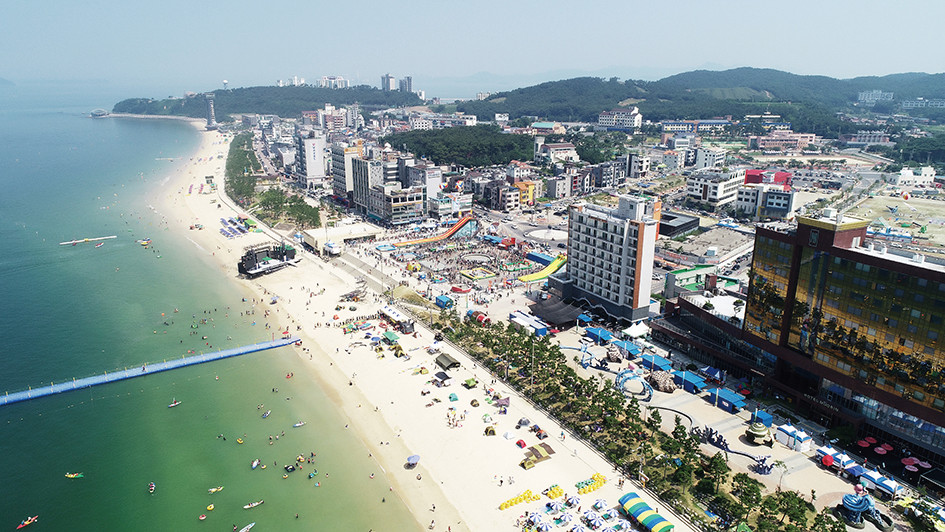
This is the largest beach on the west coast of Korea, developed as a resort since the 1930s. Its sand beach is made up of powdered seashell, which washes off quickly and doesn’t stick to one’s body. The average depth of the beach is 1.5 metres, and its gentle slope makes it ideal for families with children. It is the First Sight of Nine Sights of Boryeong, and it serves as the host of numerous festivals and events, including the famous Boryeong Mud Festival.
Sudeoksa Temple
Chungcheong-do Area
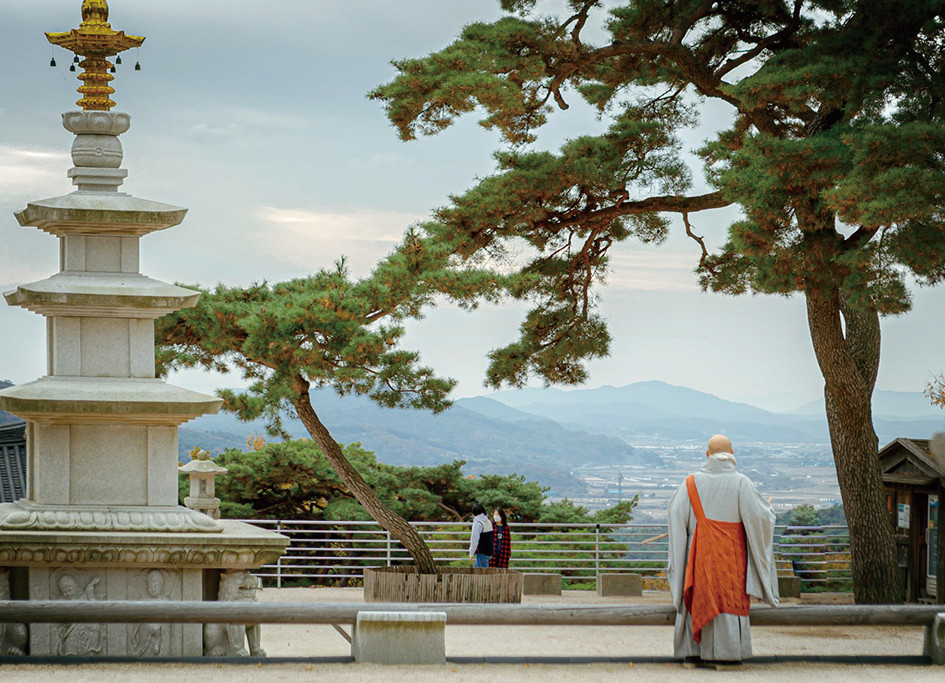
Sudeoksa Temple is a one-thousand-year-old Buddhist temple founded in the Baekje Era. In particular, Daeungjeon Hall built during the Goryeo Dynasty is the oldest wooden building that currently exists in Korea, holding crucial historical and cultural values. Inside the temple area, one can find Sudeok Inn, a historical site where painter Goam Lee Ung-no created various paintings and Seon Art Museum, the first Buddhist art museum in Korea.

Mancheonha Skywalk & Danyanggang Jando Trail
Chungcheong-do Area
This observation deck is located 120-metres above Manhakcheon Peak (340 metres). It overlooks a cliff approximately 80-90 metres above the Namhangang River, and visitors might feel as if they are walking on air. There are plenty of extreme sports activities on-site such as zip wire, alpine coasters and slides. Visitors can also walk on the Danyanggang Jando Trail, along the rock walls of the mountain, for a thrilling trekking experience.
generate
a custom
a custom
Korea
Expereince